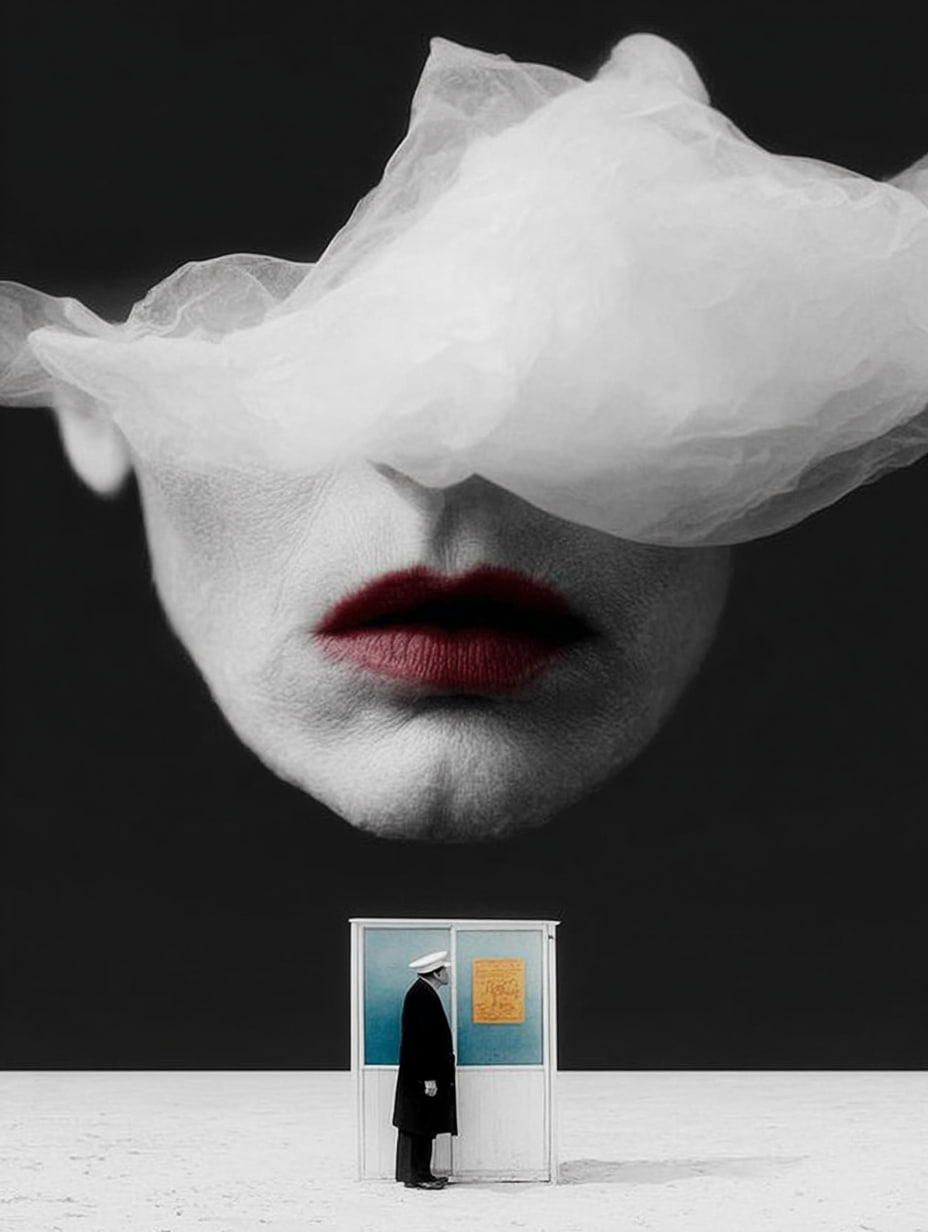
We like to think that somewhere out there exists another “me.” In another universe, I took a different path, didn’t lose, didn’t make mistakes. Comforting, right? But if you look closer, it feels more like an illusion: as if we’re pausing life and watching a borrowed version, instead of stepping into the real flow. In my art inspired by multidimensional reality, I explore these ideas, the kaleidoscope of life, “choice”, and hidden realities, reflecting them visually through prints and paintings.
Science also offers its multiverses – bubbling worlds with different laws, where every choice repeats millions of times. Sounds impressive, but strangely empty: no one will see these worlds, no one can confirm they exist.
The “Copy” Side of Science
- Invisible reality.
George Ellis puts it bluntly: multiverses are too far to verify. It’s not a tool for understanding; it’s more like a philosophical comfort pillow. - The probability problem.
If the world is infinite, absurd scenarios become just as real as our life. Boltzmann brains, random universes, impossible events, all coexist. We observe a kaleidoscope of probabilities where selecting a single path becomes impossible. - Pseudo-scientific comfort.
Some physicists call the multiverse a “handy excuse for everything.” It hides more than it explains. For more on this, see John Horgan’s article on the pseudoscience of multiverses.
⸻
The Philosophical Angle
The main trap of the multiverse is still the same duality. Was/wasn’t, yes/no. We’re afraid to admit reality is more complex, so we multiply copies. It’s like keeping a black-and-white TV on and thinking a thousand duplicates will reveal the picture.
When every possibility supposedly exists somewhere else, choice loses meaning. Life becomes statistics, not a flowing experience.
⸻
True Multidimensionality
But what if it’s not copies, but a network of interconnected paths?
Multidimensional reality in art is not parallel copies, but a network of interconnected paths. Not “another me,” but a whole spectrum of possibility that exists in every moment.
The world doesn’t split into copies. It’s like a kaleidoscope: a narrow view gives only a slit, but look wider… and the pattern unfolds. And this pattern isn’t just pretty; it’s a real playground, where your choice isn’t a copy of someone else’s path, but the discovery of a new trail.
⸻
An Artist’s Take
Multiverses may be a beautiful fantasy, like placing mirrors around yourself and admiring reflections. True discovery lies in philosophy of reality in art, depth, and the spectrum we haven’t fully perceived.
Instead of searching for another “perfect me,” we can look at the here and now: at chaos and harmony, light and shadow, the game of shades between black and white. Then the world stops being a linear story. It becomes a kaleidoscope, and every glance reveals something new.
Check out more essays on duality and multidimensionality in art or explore my art prints collection for visual interpretations of these concepts.
This project operates at the edge of simulated memory and synthetic aesthetics.
It explores the phantom residues of non-existent systems – visual traces from worlds we never lived in, but somehow recall.
The works are smooth errors, graceful misalignments, intentional misreadings of digital clarity.
This is not a commentary on technology – it’s a symptom of it.
The viewer enters a seductive surface and is left with the feeling of déjà vu from a dream someone else had.


